Chair Tai Chi Isn't a Workout. Here's Who It's For, and What a 26-Week Trial Found
An honest guide for seniors and the people who look out for them. No routine here: the movements live in the book.
If you’ve looked into chair tai chi for seniors, you’ve probably met the big claims: stronger legs, fewer falls, all from a kitchen chair. Most of that evidence comes from tai chi done standing, and you deserve to know what has actually been tested in a chair before you pull one up. Below: what chair tai chi is, what a session looks like, who it suits, and the two things it can’t honestly promise.
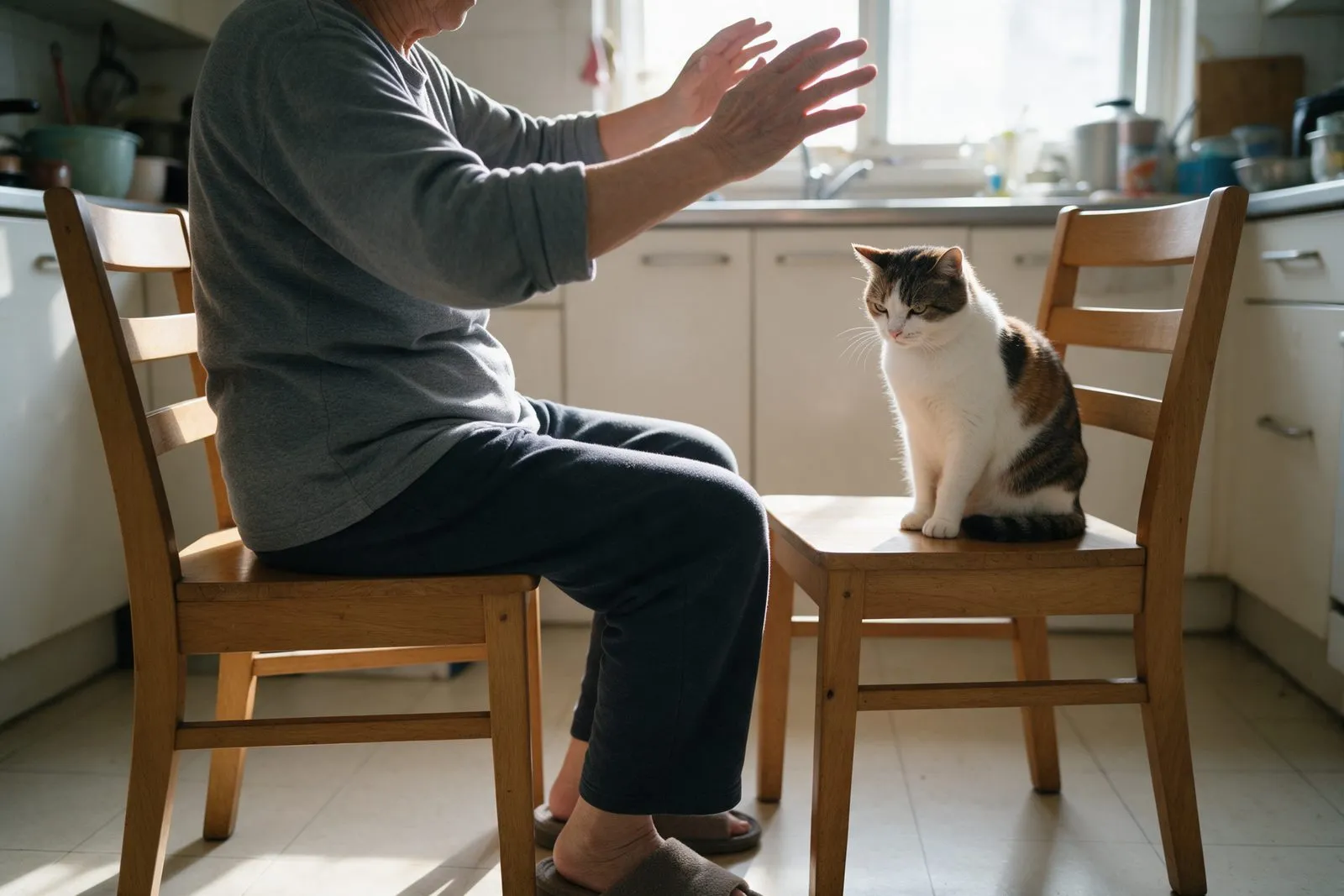
Start with the chair it happens in. Four legs, no wheels, no deep cushion. Chair tai chi is slow, breath-paced movement of the arms and trunk, done sitting down, and the person’s weight stays in that chair from the first breath to the last. Nobody stands, nobody kneels, and nobody gets down to the floor.
What it is
Tai chi is a slow, flowing Chinese movement tradition, usually practiced standing. The chair version keeps the flow and drops the standing. What remains is the arms, the chest, and small shifts of weight from one side of the seat to the other.
The pace comes from the breath, not from a count or a beat. That link between breath and movement is most of what makes it feel like tai chi and not like arm exercises done in a chair.
What a session looks like
From the outside, very little happens, and that is by design. A session can be a few minutes at home or a longer class; in the trial described below, sessions lasted 40 minutes. The person stays seated throughout, and a handful of slow, small movements of the arms and chest follow, each paced by the breath.
Someone walking past the room might think the person is resting. In a sense they are, with intent. The effort is light, the breathing stays easy, and the whole thing is quiet enough to do in a living room with the television on mute.
Who it suits
Chair tai chi is built for people for whom standing practice is out of reach, or out of the question for now: people who can’t stand for long, wheelchair users, people coming back after an illness or a hospital stay, and people whose balance makes a standing class feel risky. It is also a reasonable choice for anyone who has stopped expecting to enjoy moving and wants something gentle to come back to.
Anyone with a health condition or an injury should talk to a doctor or physical therapist before starting a new activity, including this one. Sharp pain, dizziness or real breathlessness are reasons to stop. If dizziness keeps coming back, tell your doctor. If it comes with blurred vision, numbness, trouble speaking or a severe headache, call 911.
What it is not
Not a workout. Chair tai chi doesn’t reach the moderate intensity the guidelines count. Seated tai chi is rated as light effort, 1.5 METs, in the Compendium of Physical Activities (Ainsworth et al. 2011), well below the 3 METs that define moderate intensity. Those are energy-cost reference values, not a trial, and they are enough to say it shouldn’t be counted toward moderate-activity minutes. The WHO guidelines for adults 65 and over (Bull et al. 2020) set their targets at moderate intensity or above, so chair tai chi on its own does not replace what they ask for.
Not a proven falls treatment. A Cochrane review by Sherrington and colleagues (2019) found that tai chi may reduce falls in older adults living at home. The tai chi in those trials was there to challenge balance, and falls researchers have cautioned that a seated version may no longer give the same benefit. That result can’t be borrowed for chair tai chi.
What has been measured. In a 2016 randomized trial (Hsu, Moyle, Cooke and Jones), 60 older adults who used wheelchairs, living in a long-term care facility in Taiwan, were split into two groups of 30. One did seated tai chi, 40 minutes three times a week for 26 weeks; the other kept to usual activities. The tai chi group had lower depression scores and better quality of life. The trial measured mood and quality of life only; it didn’t look at falls or strength. That is one trial, in one setting, with one kind of participant: a reason to take the practice seriously, and no more than that.
“If it’s this light, what’s the point?”
It’s the right question, and the honest answer is in the trial above. It didn’t measure strength, and it didn’t measure falls. What improved was mood and quality of life.
For someone who can’t stand for long, can’t get down to the floor and has stopped expecting to enjoy moving, a practice that can be done gently, in a familiar chair, and repeated tomorrow is worth having on those terms alone. The mistake would be to sell it as more than that, and plenty of videos do.
Where the movements are
This article stops short of teaching anything, on purpose. The movements need room to be explained properly: the chair checks, the breathing, where each movement stops, and what to do on a day when something doesn’t feel right. That is what Tai Chi in a Chair is for, one movement at a time, with a drawing for each.
One thing you can do today, without moving at all: look at the chairs in your home and find the one that would do. Four legs, no wheels, no deep cushion, and a backrest you can lean against. Most homes have one, usually at the kitchen table.
Put your name in the next book.
Leave your first name and email and you’ll hear the day a new Second Stair book comes out. Tick one box and your name goes inside it too. Nothing in between — we have no intention of pestering you.